
The Tom Isaacs Award

In memory of former co-founder and President of Cure Parkinson’s Tom Isaacs, who died in May 2017 aged 49, Cure Parkinson’s and Van Andel Institute jointly present this annual award to a researcher who has shown the greatest impact on the lives of people living with Parkinson’s and/or has involved people with Parkinson’s in a participatory way in their work.
The award is presented in recognition of Tom Isaacs’ vision that a cure for Parkinson’s will be found but greater value is gained from working with people with Parkinson’s in this quest.
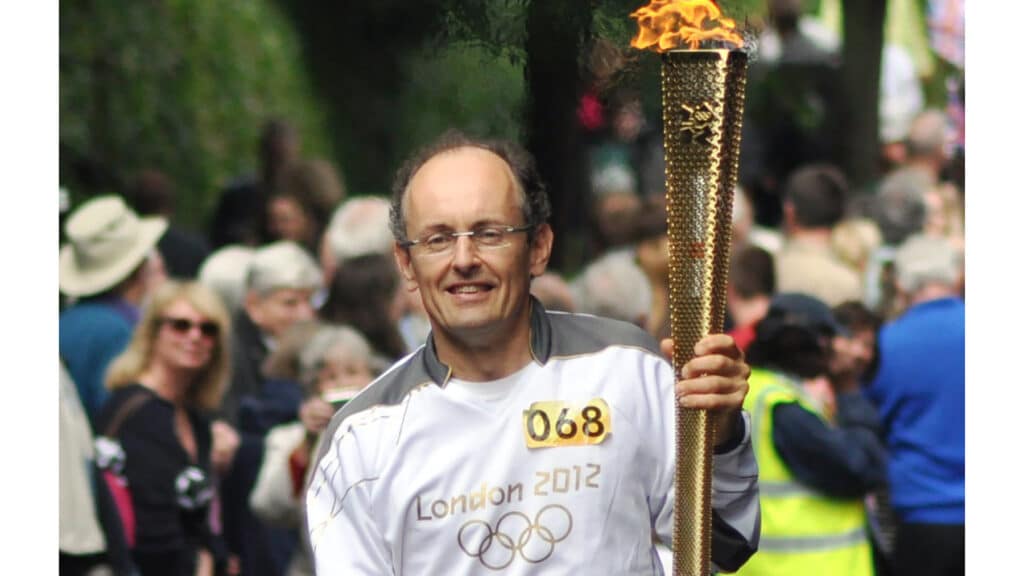
The Tom Isaacs Award recognises a researcher who is making a meaningful difference to people affected by Parkinson’s by working with them, not just for them. It celebrates impactful research, genuine collaboration, and a strong commitment to partnership.
If you think you know someone who could be deserving of this award, please use the below guidance to help with your nomination.
Who can nominate and be nominated
We welcome nominations from anyone connected to Parkinson’s, including people living with the condition, care partners, family members and friends, as well as researchers, collaborators, and those involved in research or engagement activities.
Nominees should be researchers working in Parkinson’s who can demonstrate meaningful collaboration with people affected by the condition and who are making, or show strong potential to make, a positive difference to people’s lives.
What we are looking for
Strong nominations will show:
- meaningful collaboration with people affected by Parkinson’s
- evidence of impact, or strong potential for impact
- ongoing commitment to partnership
- and a clear spirit of working alongside people affected by the condition.
Guidance for completing the form
Please write clearly and concisely, using examples and evidence wherever possible. Try to avoid overly technical language so your nomination can be understood by both researchers and people affected by Parkinson’s.
If you are a person affected by Parkinson’s, your lived experience and perspective are especially valuable.
When describing involvement, please go beyond simple consultation. We are looking for examples where researchers have actively involved and supported people affected by Parkinson’s to help shape, influence or guide their research, for example through co-design, shared decision-making, advisory groups, governance, or co-authorship.
Strong answers explain:
- how people were involved
- when they were involved (for example during the idea, design or delivery stages)
- what they contributed
- and what difference their involvement made.
Personal experiences and observations are welcomed. You may wish to include examples from events, conversations, research participation, community activities, advocacy work, or changes you have personally seen or experienced.
Links or references can be included where helpful. Supporting evidence might also include publications, clinical studies, policy or guideline contributions, public involvement activities, or feedback from people affected by Parkinson’s.
When describing impact, focus on how the research has helped, or could help, people affected by Parkinson’s in real life. This might include improving care or treatment, helping people manage symptoms or daily life more easily, improving understanding of Parkinson’s, increasing access to support or research opportunities, or influencing services, guidance or policy.
Impact does not need to be fully realised yet, but there should be a clear sense of how the research could lead to meaningful benefits in the future.
Across your answers, try to show how involving people affected by Parkinson’s has strengthened the research and contributed to its impact.
Guidance for each question
Involvement of people living with Parkinson’s
Please describe how people were involved in the research, at what stages they were involved, and how their involvement influenced or improved the work.
Impact on the lives of people living with Parkinson’s
Please describe how the research has helped, or could help, people affected by Parkinson’s. This might include improvements to care, treatment, support, quality of life, access to research, or understanding of Parkinson’s.
Where possible, include examples of how the work has already been used, or how it could lead to meaningful benefits in the future.
Other information you feel might be of interest to us
You may include supporting evidence such as publications, clinical studies, policy or guideline contributions, public involvement or engagement activities, testimonials, or personal observations and experiences. Links or references can also be included where helpful.
How nominations are assessed
Nominations are reviewed by a panel including both researchers and people affected by Parkinson’s.
They are assessed on:
- collaboration and involvement
- impact or potential impact
- commitment to partnership
- and the overall spirit of working alongside people affected by Parkinson’s.
Each area is scored from 1 (limited evidence) to 5 (exceptional evidence).
Please provide nominations that centre lived experience, demonstrate genuine partnership, and clearly show how research can make a meaningful difference to people’s lives.
Thank you for helping us recognise and celebrate outstanding collaboration in Parkinson’s research.
Nominate someone for the Tom Isaacs Award 2026
Previous winners of the award
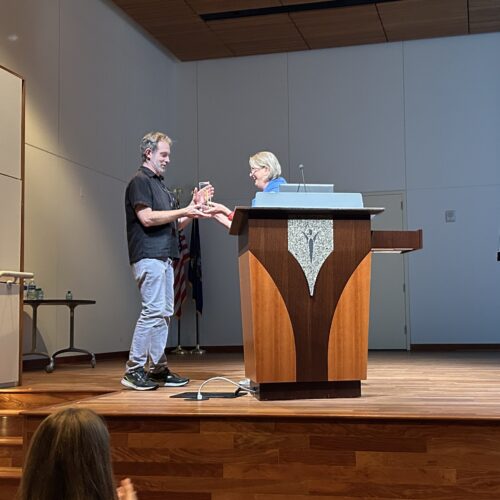
Dr Matthew Farrer – 2025
Dr Farrer is a Professor of Neurology at the University of Florida, where he specialises in Molecular Neuroscience and Neurogenetics. Dr Farrer’s work in the genetics and neuroscience of Parkinson’s is critically acclaimed, and focuses on uniting people with Parkinson’s and researchers for their mutual benefit.
Read more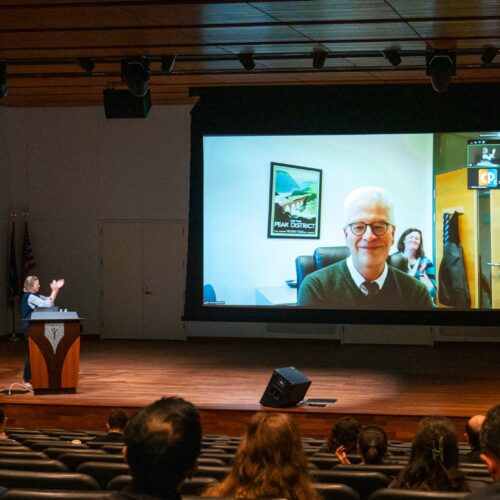
Professor Oliver Bandmann – 2024
Professor Bandmann is a Professor of Movement Disorders Neurology and Co-Director of the Cross-Faculty Neuroscience Research Institute at University of Sheffield, UK. Alongside his research, he serves as a National Neurosciences Advisory Group Lead, where he works alongside patients to improve accessibility and quality of care for people with Parkinson’s.
Read more
Dr Natasha Fothergill-Misbah – 2023
Dr Natasha Fothergill-Misbah’s research focuses on Parkinson’s in sub-Saharan Africa, and she has dedicated her career to improving the lives of people living with the condition in these regions.
Read more
Professors Michael Okun and Ray Dorsey – 2022
Drs. Dorsey and Okun, together with Todd Sherer, CEO of The Michael J. Fox Foundation for Parkinson’s Research and Professor Bastiaan Bloem, a previous Tom Isaacs Award winner, co-authored the hugely significant book Ending Parkinson’s, a breakthrough publication which highlights the urgent need for better education about Parkinson’s.
Read more
Dr Camille Carroll – 2021
Cure Parkinson’s and Van Andel Institute are delighted to announce Dr Camille Carroll, Associate Professor in Neurology at University of Plymouth, as this year’s deserving winner of the Tom Isaacs Award.
Read more
Professor Caroline Tanner – 2020
Professor Tanner is a shining example of the very ethos of the Tom Isaacs Award, which is to recognise a researcher who has shown great impact on the lives of people living with Parkinson’s and has involved people with Parkinson’s in a participatory way in their work.
Read more
Dr Tilo Kunath – 2019
Dr Kunath is one of the world’s leading stem cell researchers and it is his compassion and enthusiastic engagement with the PD community, and his willingness to share his expert research knowledge that particularly impressed both those who nominated him and the panel of judges.
Read more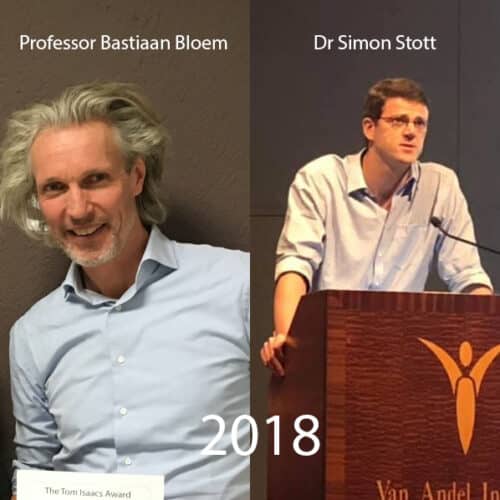
Prof. Bas Bloem and Dr Simon Stott – joint winner in 2018
The comprehensive nominations for both candidates made choosing between them very difficult – therefore it was unanimously judged appropriate to celebrate two winners this year!
Read moreThe Tom Isaacs Award is presented annually.